Since mid-2025 I’ve been looking at Meshtastic. Using T-Beam and Heltec V3 modules and the Android App. Initial testing was indoors on the workbench which then moved out into the back garden.
It’s On the Roof
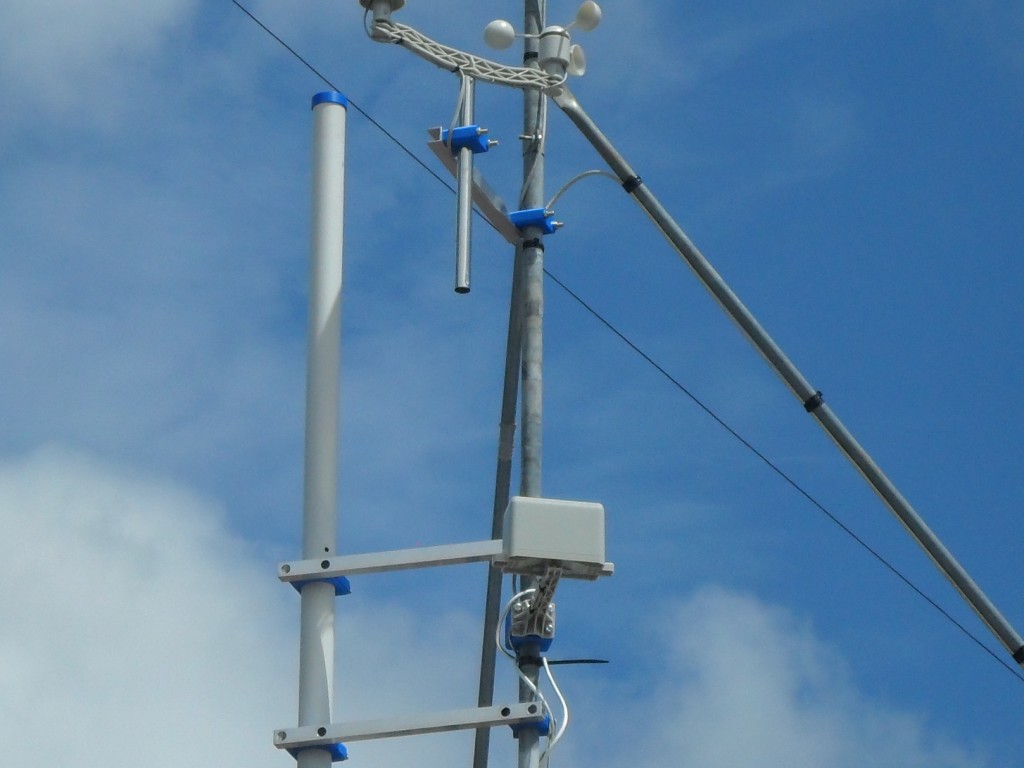
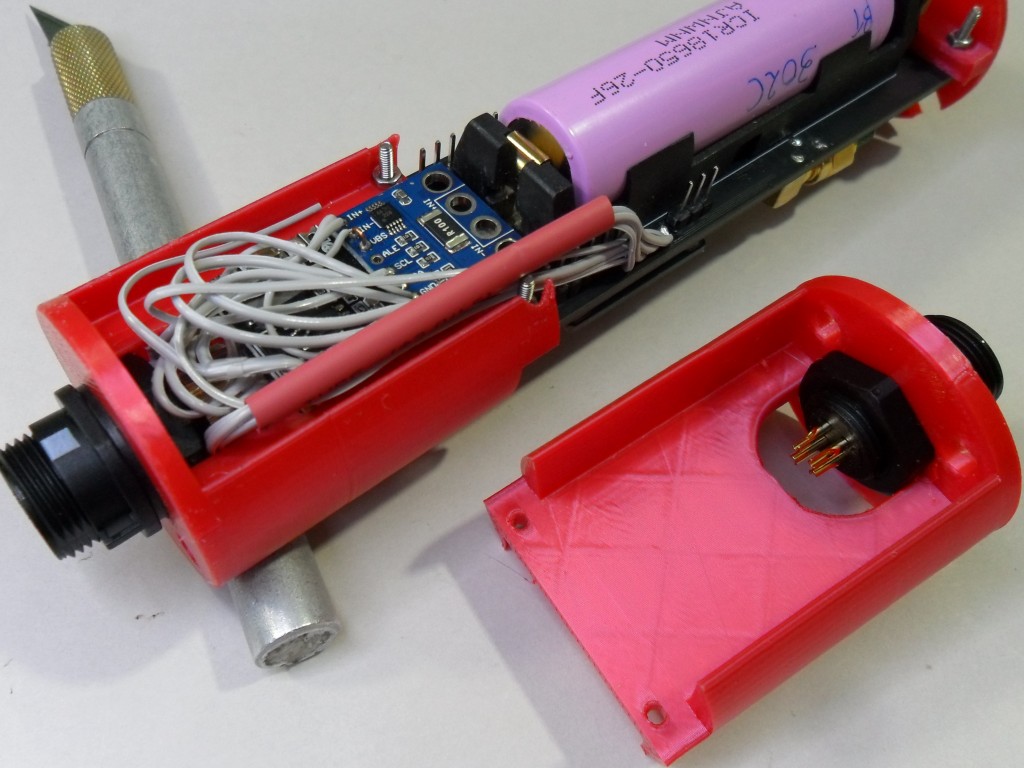
The Meshtastic node is inside the 40mm DWV (drain waste vent) pipe with 3D printed top cap and lower pipe clamp brackets. The original T-Beam Meshtastic module was connected to wifi as Bluetooth is not reliable on the roof. It won’t run wifi and BT at the same time. Note: 3D printed (PLA) parts are not fully waterproof but are good enough in this application. The top cap doesn’t seem to leak. The mounting bracket/clamps probably do, having hollow cores but have been fine so far. Red filament fades to orange quite quickly but over several years outside in the direct weather I haven’t notices any structural issues. Aluminium bars, 3D printed clamps in 2 halves, secured using 6mm stainless bolts. |
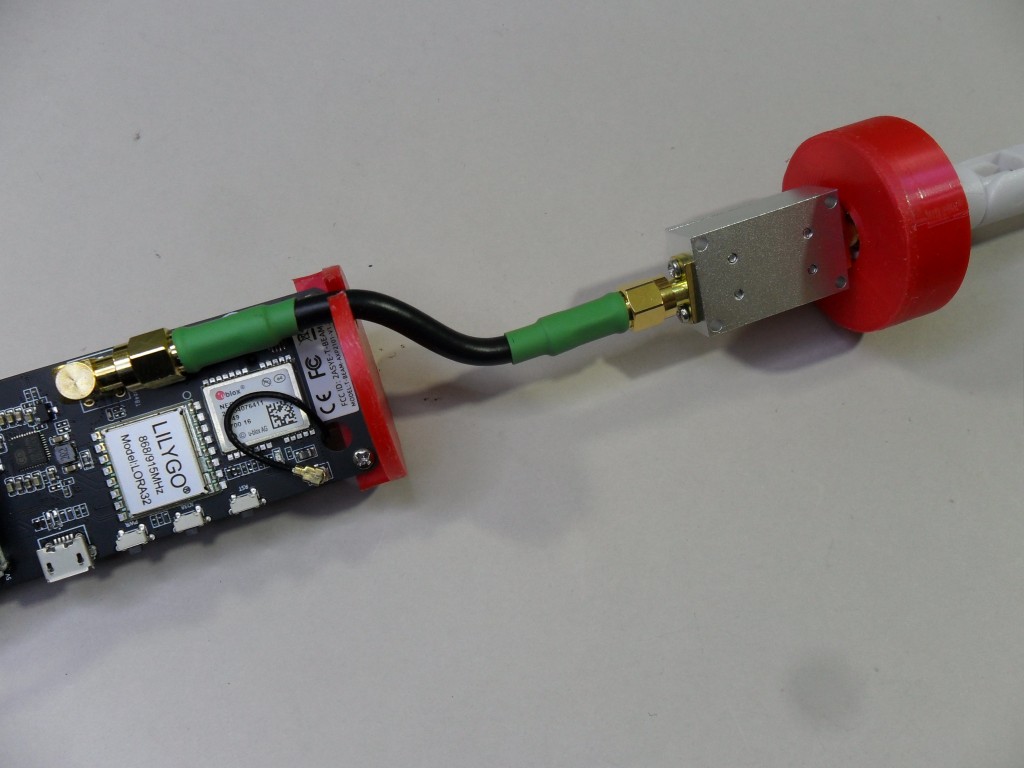
Original T-Beam Module
Note that the right-angle SMA antenna connector on the T-Beam board has been rotated 90-deg. This requires some careful soldering and cleaning to keep the board safe. We are located about 200 meters from 2 cell towers and the 915MHz Meshtastic band is between the cellular up and down bands. This creates a high noise floor over the band and wipes out Meshtastic. Without the filter Meshtastic works if not higher than about 2M above ground which limits coverage. Mounting high should in theory improve coverage but is completely wiped out by the cellular systems. Adding the bandpass filter eliminates the cellular interference allowing the coverage benefit from increased mounting height.
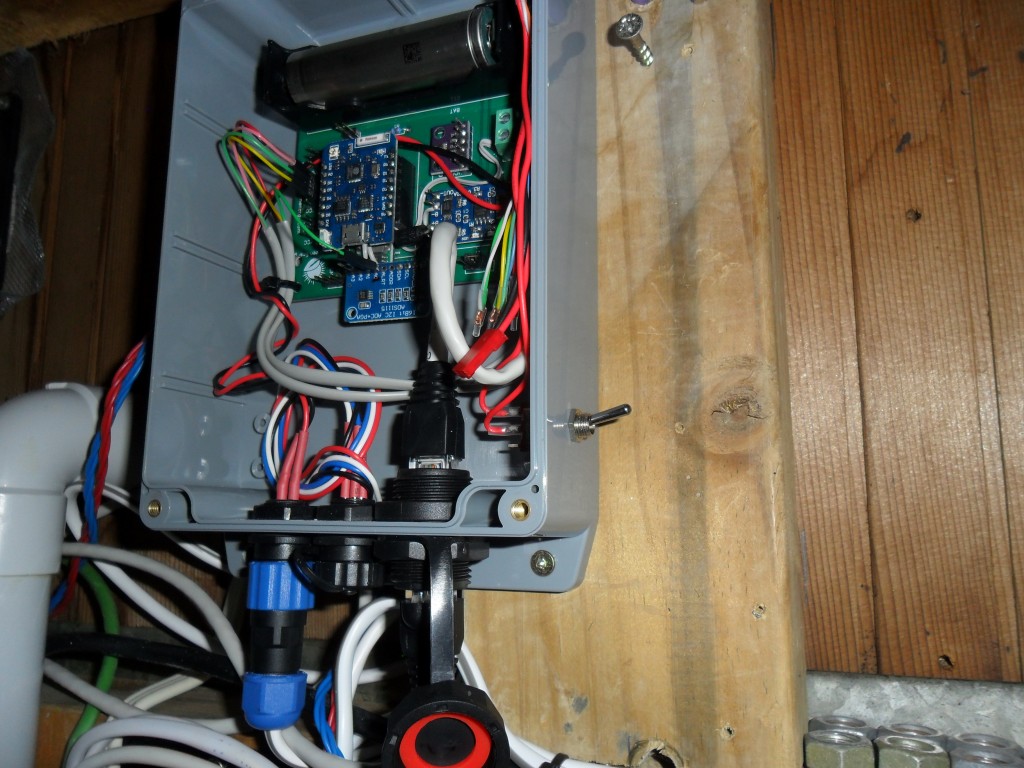
In our case, a junction box at the bottom of the pole combines the Meshtastic power with weather sensors into one Cat-5 cable into the roof. All waterproof connectors which seem to be reliable outdoors.
The 30 Watt solar panel and 20Ah 12V SLA battery are easily able to cope during summer but struggle occasionally during mid winter, requiring an external boost. This also powers 4 small indoor night lights. More battery capacity would probably solve it, maybe also a larger solar panel. T-Beam WIFI problemAfter a while of operating Meshtastic connects to wifi but the web browser and Android app will not connect to the node. The longer it runs the worse it seems to become. Updating the Meshtastic firmware doesn’t solve the problem. I have read that a complete flash erase and reprogram will solve the wifi problem. I haven’t tried this yet. |
| . |
| . |
.